
How I Built an Interactive Learning Experience Quickly with AI
A hands-on look at using AI to create bite-sized, science-backed learning experiences


AI is opening doors to learning experiences that were once impossible. Imagine turning any topic into an interactive lesson with visuals, activities, and instant feedback. Advances in AI now make this possible. QuickElevate is one example of how AI can transform knowledge into bite-sized, engaging experiences grounded in learning science.
Rethinking How We Learn
Traditional study methods often overwhelm learners with long, static content. Many people abandon topics because studying feels slow. Research in cognitive psychology shows that breaking information into small, focused chunks improves retention and engagement. Microlearning, the practice of delivering content in short, digestible units, aligns with how our working memory encodes new knowledge.
AI now enables these principles to be applied at scale. A topic can be transformed instantly into a structured learning experience that is interactive, visual, and responsive. Learners can engage with content actively, reflect on what they have learned, and receive immediate feedback.
QuickElevate as an Example

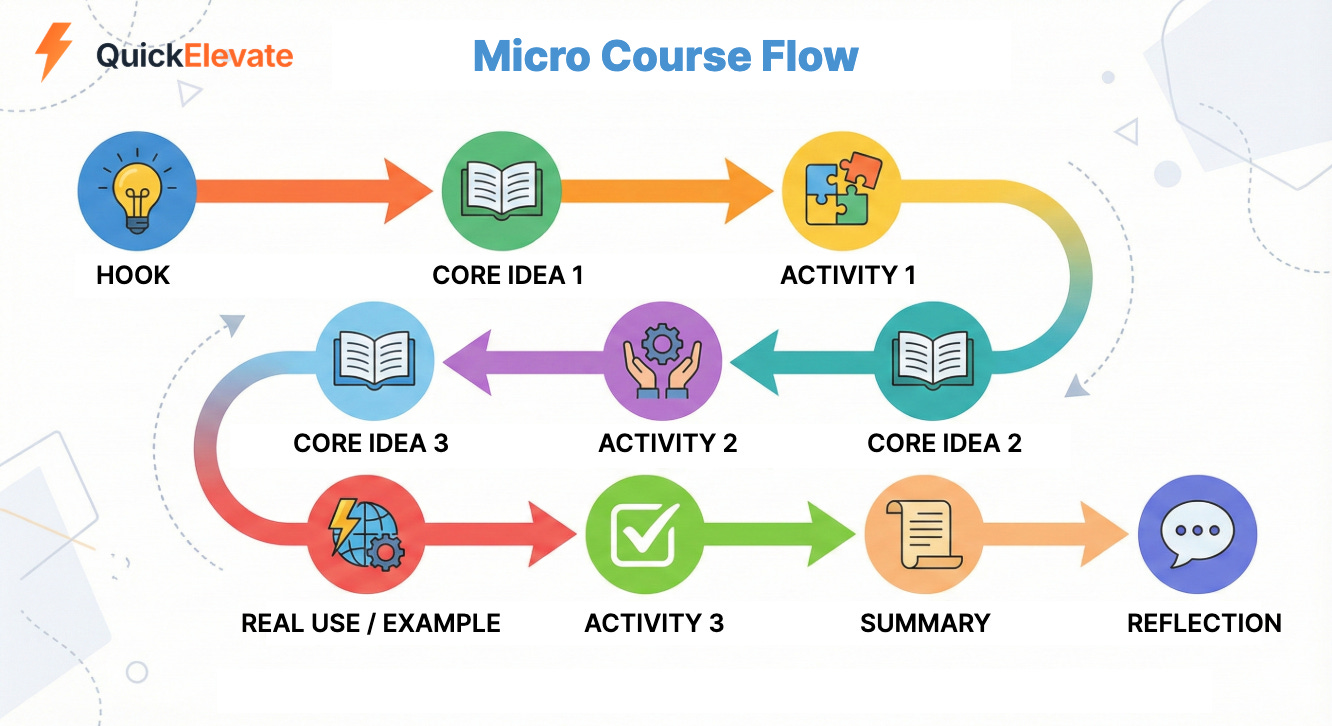
As part of a Kaggle competition, I built QuickElevate in less than 12 hours. It is still an early-stage prototype, but it demonstrates how AI can rapidly transform any topic into a structured learning experience. Using Google AI Studio with Gemini 3, I was able to generate interactive micro-courses from simple prompts.
Each micro-course features:
Fact-checked text paired with AI-generated images
Interactive reflection exercises with speech-to-text feedback
Text-to-speech support for listening or manual reading
Keyboard navigation and mobile-friendly design
Recommendations, badges, and retry logic to reinforce learning
These features are designed not as technical novelties but to support the learning experience. Visuals aid memory, interactivity encourages engagement, and feedback helps learners reflect and consolidate knowledge efficiently.
Lessons from Building with AI
Building QuickElevate under 12-hour highlighted the potential of AI-powered learning tools. AI Studio translated brief instructions into fully working interactive content, showing how quickly educators and learners can experiment with AI to create personalized learning experiences.
The Future of Learning
AI is not replacing teachers or learning itself. Instead, it provides new tools that extend what is possible, allowing knowledge to be delivered in ways that are more interactive, accessible, and science-backed. QuickElevate illustrates one approach, but the broader opportunity is for the community to explore and adapt AI in education. By combining evidence-based learning principles with AI’s capabilities, we can make knowledge more engaging, effective, and available to anyone, anywhere.
QuickElevate is open-source, so you can try it yourself and even explore or modify its code. Check it out in Google AI Studio here.